





TRIENNALE
Concept
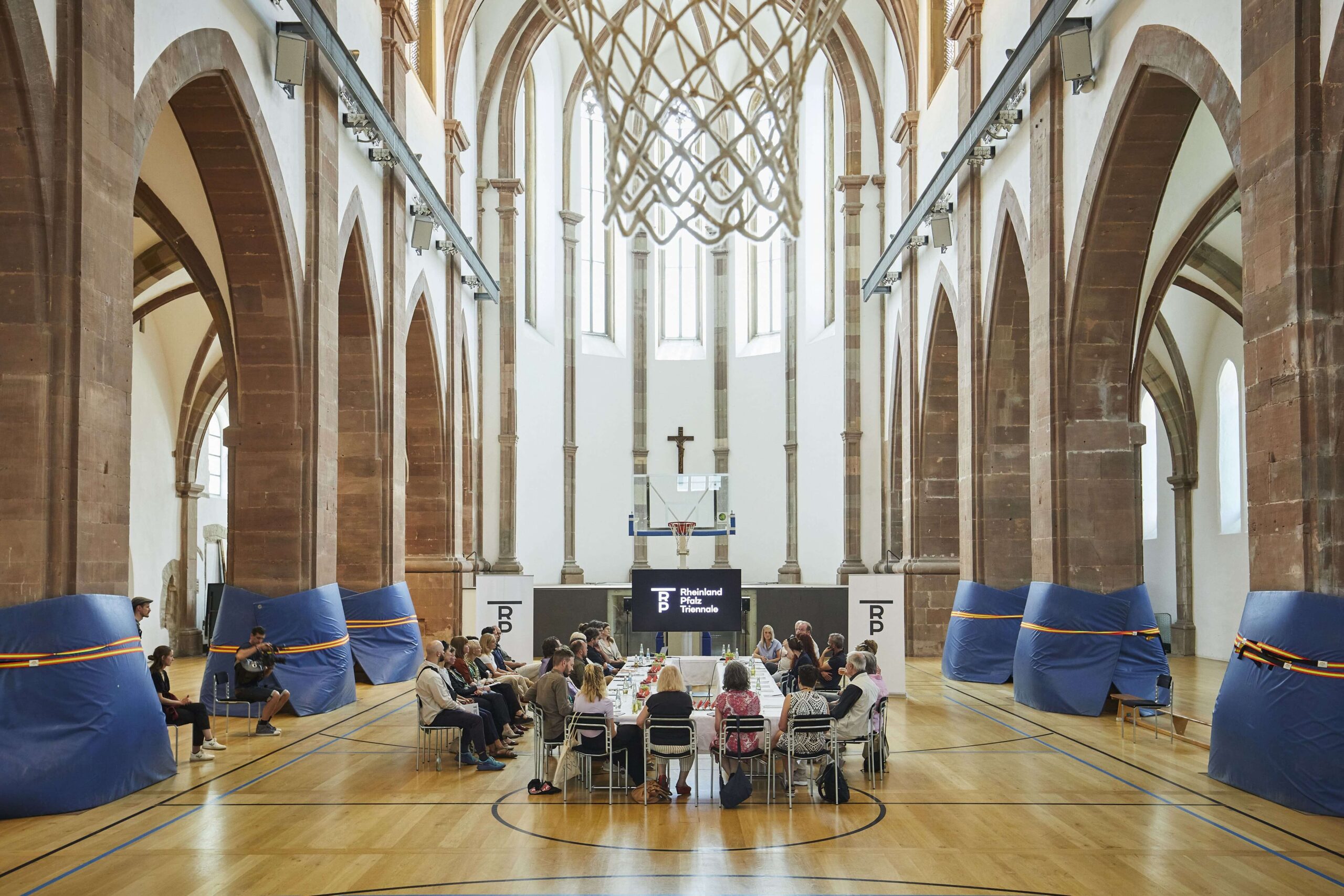
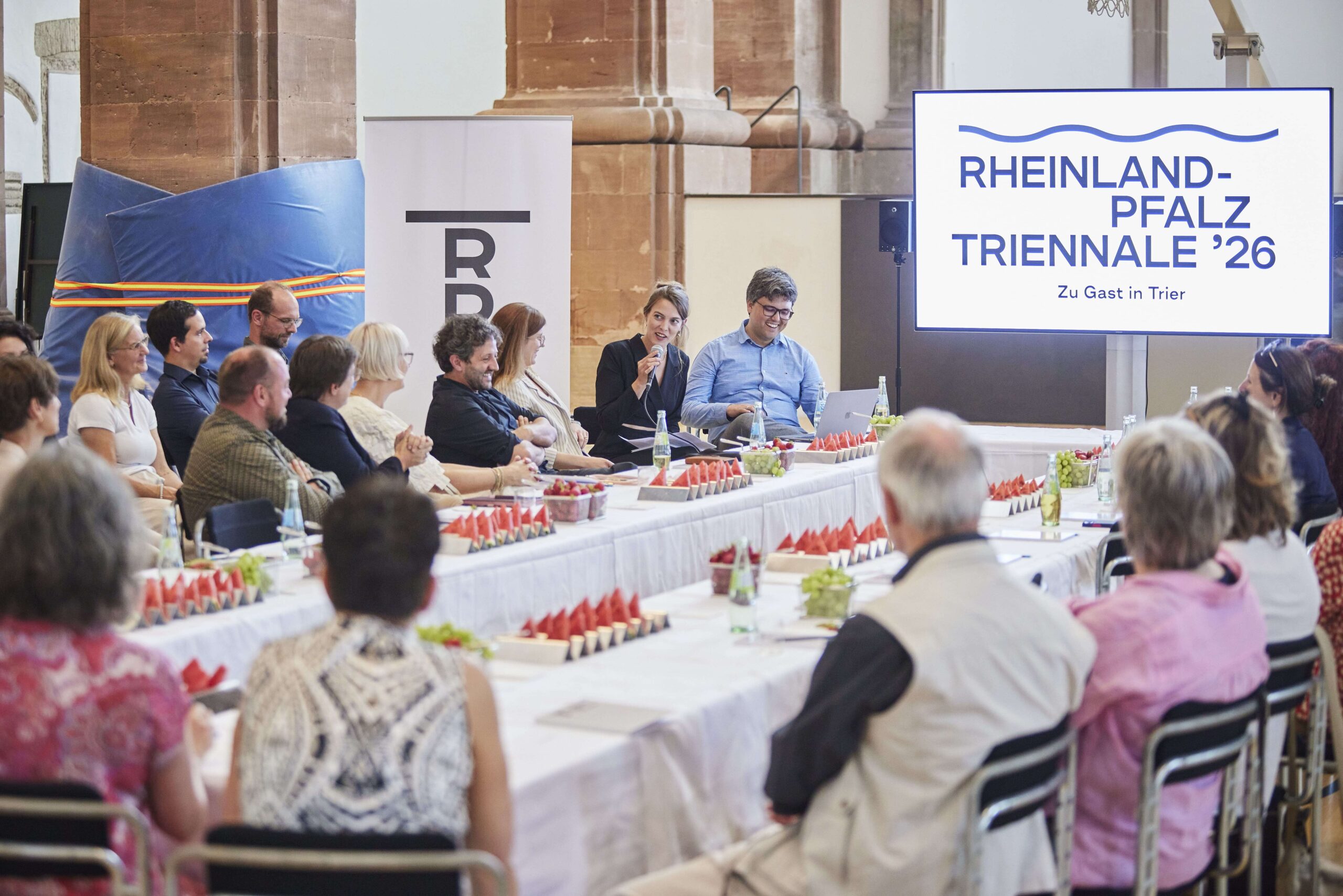
The Rhineland-Palatinate Triennale is a new format of a curated state art exhibition, which from 2026 onwards will focus on contemporary art in a three-year cycle. From April 24 to May 31, 2026, the Triennale will showcase artistic positions from across Rhineland-Palatinate. It is conceived as an open, dynamic forum – a space for artistic diversity, new ideas, and dialogue between art, society, and history.
The first edition in 2026 will feature 53 artistic positions selected by a professional jury, providing a high-quality overview of the current art scene in the state – innovative and diverse. Accompanying programs such as workshops, guided tours, and participatory formats will offer visitors additional access points, making the Triennale an immersive art experience for everyone.
Under its umbrella, the Triennale also brings together local initiatives: within this framework, cultural initiatives, artists, and institutions of the host city can contribute their own events and projects. This creates, over six weeks, a multifaceted cultural map that extends far beyond the Triennale itself, connecting art, programming, and exchange.

HISTORY
Our History: From the State Art Exhibition to the Rhineland-Palatinate Triennale
The history of the Rhineland-Palatinate Triennale is rooted in a long tradition: the state art exhibition, which for decades made the diversity of the region’s art scene visible. Over time, the formats were repeatedly adapted to the needs of the art scene and the spirit of their respective eras.
Most recently, in 2018, under the new title Flux4Art, the event acquired a contemporary profile. The exhibitions were not limited to a single location, but took place decentrally across multiple cities in the state – including historic buildings such as the bunker in Montabaur (2018), museums in Boppard (2018), Neuwied and Mainz (2022), and the industrial monument Sayner Hütte (2020). In this way, art was presented in new contexts and made accessible to a broader audience. Contemporary positions in painting, photography, installation, performance, and digital media showcased a wide spectrum of the art scene in Rhineland-Palatinate.
With the Rhineland-Palatinate Triennale, which will take place for the first time in Trier in 2026, a new chapter in the state art exhibition begins. From the experimental biennale format Flux4Art, a statewide event has emerged that presents contemporary art in Rhineland-Palatinate every three years. In addition to exhibitions in museums, galleries, and public spaces, the Triennale places particular emphasis on interdisciplinarity, participation, and inclusion. Open formats such as the “Lokalen” within the Triennale framework, as well as an extensive cultural education program, create a lively dialogue between art, society, and the region. In this way, the tradition of the state art exhibition continues – while being reimagined: as a permanent platform that showcases the diversity and innovative strength of art in Rhineland-Palatinate and radiates far beyond the state’s borders.
Curatorial Committee/Jury
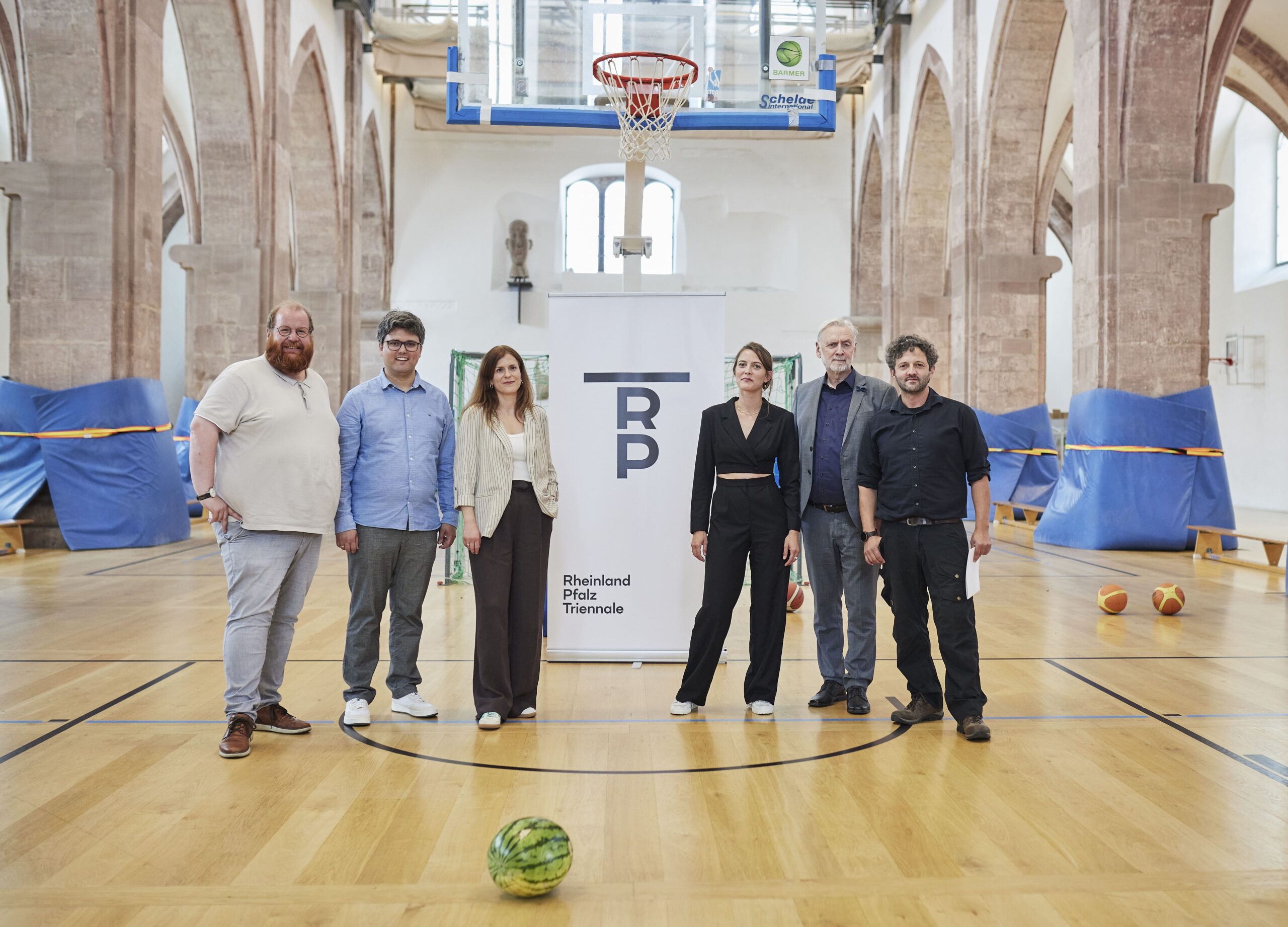
The curatorial team of the first Rhineland-Palatinate Triennale consists of three individuals, each bringing different perspectives and experiences. The curatorial leadership is provided by Dr. des. Carolin Heel and Norina Quinte.
Dr. des. Carolin Heel is an art historian and curator with her own artistic practice. She brings art-theoretical perspectives into a curatorial approach that emphasizes resonance, interdisciplinarity, and dialogue. Her interest lies in works that question relationships, explore fragile narratives, and combine conceptual strength with aesthetic precision.
Norina Quinte, as a concept developer, curator, and founder of the platform ato, brings extensive experience at the interface of art theory and artistic practice. She develops innovative formats that challenge existing structures and transform public spaces through artistic interventions. Her focus encompasses both interdisciplinary processes and the stimulation of new perspectives.
Stefanie Schmeink is an artist and board member of BBK Rhineland-Palatinate. From her artistic practice, she develops a curatorial approach that considers both the individual and the whole. For her, curating means making independent artistic positions visible, respecting their essence while exploring their potential connections – an open field in which difference, depth, and new readings emerge.
The committee is responsible for the Triennale’s conceptual direction, develops exhibition and mediation formats, and facilitates the artistic dialogue with the selected positions.
JURY OF THE RHINELAND-PALATINATE TRIENNALE
The selection of around 53 artistic positions was made by an independent, high-caliber jury. More than 500 applications were reviewed and evaluated.
In addition to existing works, site-specific new productions were also selected, developed in close dialogue with the curatorial committee. This resulted in a diverse and innovative cross-section of contemporary art from Rhineland-Palatinate, recognizing individual artistic signatures while making shared discourses visible.
Ulla von Brandenburg is considered one of the most significant contemporary artists in Europe. Her works – ranging from films and installations to performances, watercolors, and wall works – are characterized by site-specific spatial concepts, theatrical staging, and a subtle engagement with reality, illusion, transience, and social issues. Through her multidimensional holistic concepts, she creates immersive, stage-like spaces that actively involve viewers in the narrative and visual structure of the works. Her complex works have been exhibited worldwide in renowned museums and institutions, including Palais de Tokyo in Paris, Whitechapel Gallery in London, and Kunstmuseum Bonn. Her works are also part of major collections, such as Tate Modern in London, Fondation Louis Vuitton in Paris, and the Fisher Landau Center for Art, Long Island (NY). With her extensive knowledge and artistic experience, recently enriched by a residency in Japan, she is a tremendous asset to our jury. We are delighted that she will accompany us in selecting artists from Rhineland-Palatinate.
Moira Zoitl has a research-based artistic practice encompassing video works, installations, photography, participatory, and curatorial projects. Her interests focus on the ethnic and gendered dimensions of migration in a global context. She addresses questions of the (auto)biographical and the circulation and politics of images that shape identity, with a central focus on the process of learning and the narration of “life stories.” She is interested in language learning, self-directed learning, and the “undisciplined,” multi-voiced production of knowledge, practicing resistance against the powerful, often violent effects of epistemes. Since 2006, Zoitl has worked in various artist-research collectives and teams, realizing exhibitions, conferences, and event series with national and international contributors. As part of her political work on the board of the IGBK (International Association of Visual Arts), she initiated workshops and conferences within international cultural exchange programs, including onAIRISM (2021 & 2022), Art Space Connect (2020), inEXCHANGE. Foreign Cultural Policy and Intercultural Exchange (2016), Are Artists Rich? (2012), Dreams of Art Spaces Collected (2007–2019). She also participated in various research projects, including MAKING ART – TAKING PART!, a one-year project at the University of Salzburg.
Norina Quinte and Dr. des. Carolin Heel, who provide the curatorial leadership of the RPT, brought their expertise at the intersection of art, science, and society to the jury work. Together, they voted as one of the three jury voices.
PEOPLE
Norina Quinte & Dr. des. Carolin Heel
Curatorial Direction
Christopher Kott
Project Management
Nadja Kern
Project Assistant
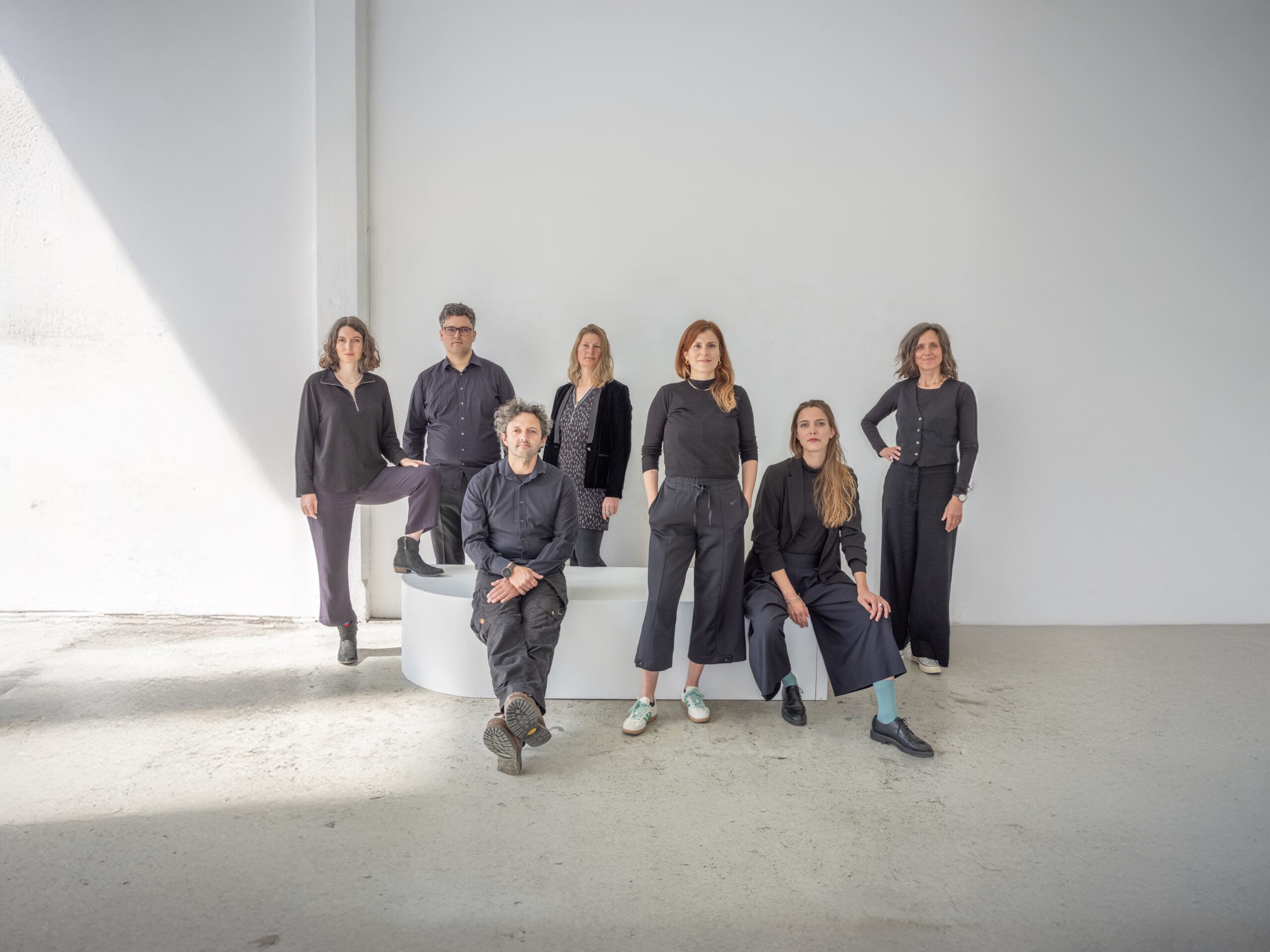
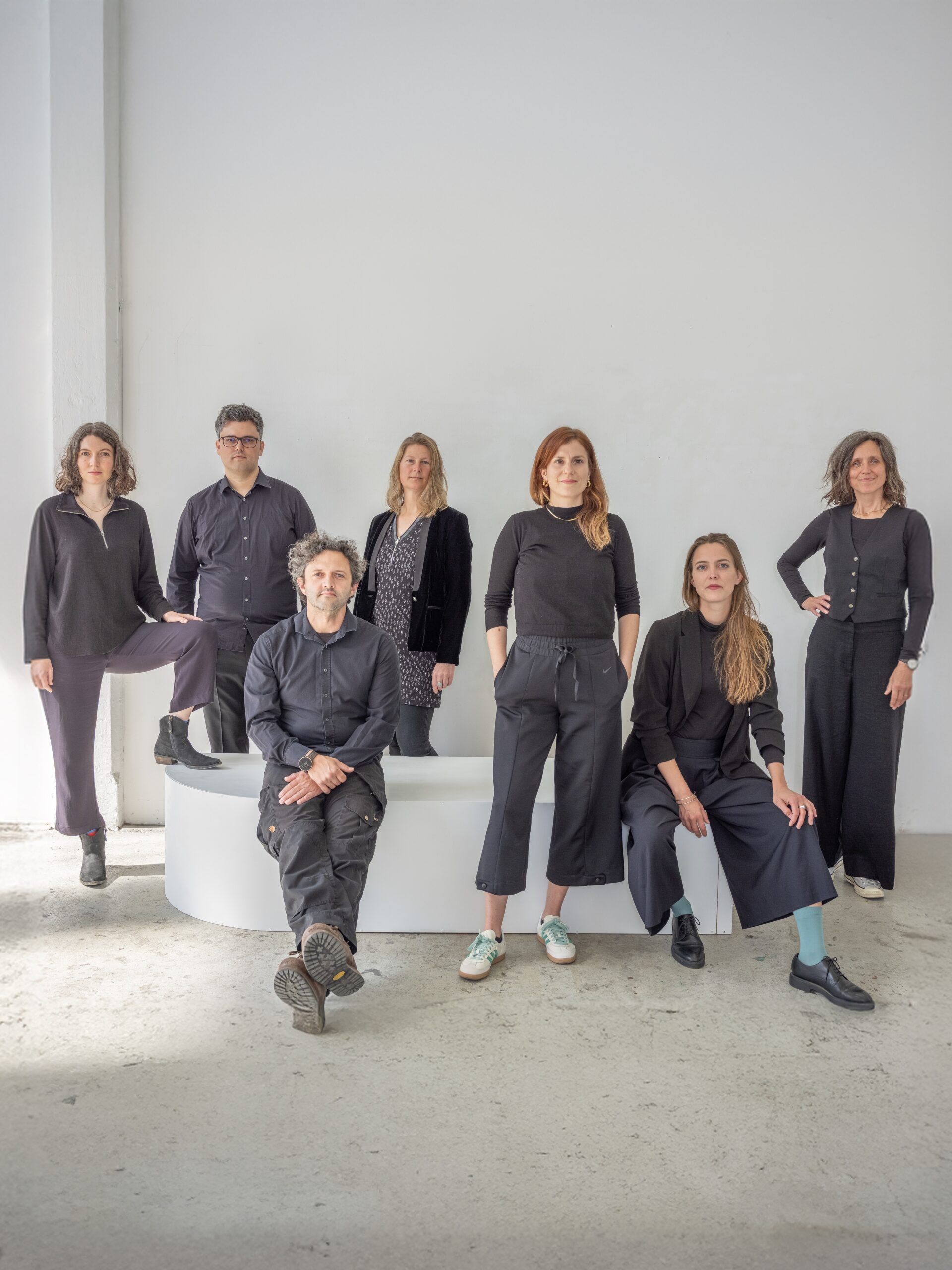
Berit Jäger, Dr. Björn Rodday & Stefanie Schmeink
BBK Rhineland-Palatinate Executive Team
BBK: ORGANIZER
The Professional Association of Visual Artists Rhineland-Palatinate within the Federal Association (BBK RLP) is the central professional representative body for professional visual artists in Rhineland-Palatinate.
It was founded in the late 1940s and is part of the nationwide BBK network. The association advocates for the recognition of artistic work as a profession and represents the economic, social, and cultural interests of its members to politics, administration, business, and the public. Its focus is on fair working conditions and appropriate fees, supported among other things by its own fee calculator, which helps with estimating and billing artistic services.
In addition to representing members’ interests, BBK RLP also promotes direct exchange between artists and the public. Among its best-known projects are the statewide “Open Studios,” during which artists open their workspaces to visitors once a year. The association is also involved in public art projects (Kunst-am-Bau), providing advisory and organizational support to ensure transparency and quality. Moreover, BBK RLP operates its own gallery in Mainz, hosting regular exhibitions and dialogue formats.
With around 500 members, approximately half of all professional artists in Rhineland-Palatinate, BBK RLP forms a strong network. It sees itself as the voice of visual arts in the state, advocating not only for better conditions but also for sustainable visibility and recognition of artistic work.
The organizer of the Triennale is the Professional Association of Visual Artists Rhineland-Palatinate within the Federal Association (BBK RLP), on behalf of and with the support of the Ministry for Family, Women, Culture, and Integration of Rhineland-Palatinate.
SPONSORS & FUNDERS OF RPT 2026
PARTNERS